The Reputation Paradox: Why Great Reviews Don't Guarantee AI Visibility
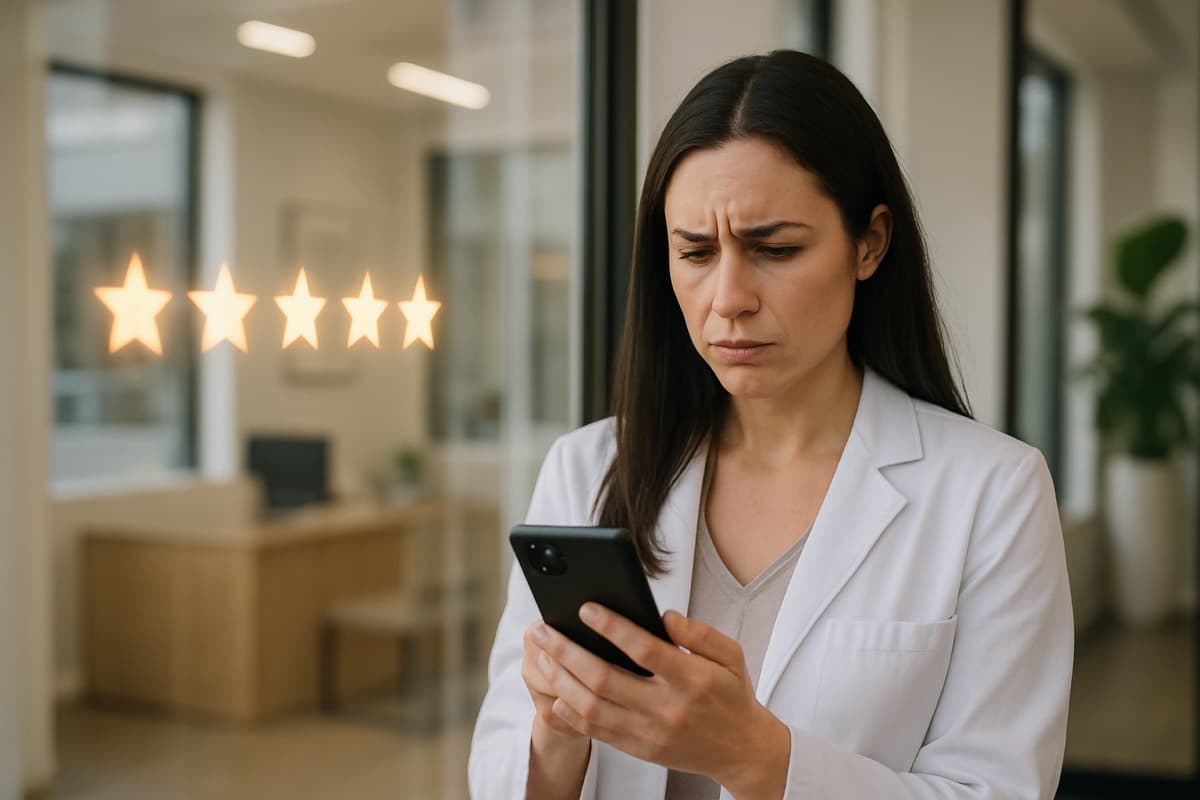
“We have a 4.9-star rating on Google. Why wouldn't ChatGPT recommend us?” It's one of the most common questions med spa owners ask once they see their own scan. The answer is a genuine paradox: a stellar reputation and AI invisibility can coexist, because reviews are only one input into a larger decision.
Reviews are a signal, not a credential
Strong reviews absolutely help. But they're one of several signals an AI weighs, and a great star rating doesn't guarantee the assistant names you. Alongside reviews, the model is also reading your schema markup, the structure of your service pages, and the third-party sources it trusts for the vertical. A med spa with excellent reviews but a thin, unclaimed Google Business Profile and no structured data on its website can still lose the recommendation to a competitor with an average rating and a cleaner machine-readable footprint.
Not all reviews are read the same way
The paradox gets sharper once you look at how review signals are actually weighed. It isn't just the star count.
- Recency and velocity beat a high score from years ago.A wall of five-star reviews from three years back reads very differently to the model than a steady, current stream — it signals whether you're an active, currently-operating business right now.
- Owner responses matter. Responding to reviews — thanking positives, professionally resolving negatives, ideally within 48 hours — signals an actively managed, trustworthy business. A pile of unanswered reviews, even glowing ones, doesn't.
- Specificity helps. Reviews and responses that reference actual services (“the laser hair removal results were incredible”) keep your review pages entity-rich, which is exactly the kind of text the model extracts facts from.
Never gate, incentivize, or buy reviews. Beyond being a platform policy violation, it produces exactly the wrong signal profile — review bursts instead of steady velocity, which reads as manufactured rather than earned.
What actually closes the gap
If reviews alone were enough, remediation would just be “ask for more reviews.” It isn't, because the model is cross-checking reviews against everything else. The businesses that close the gap are the ones that treat reviews as one lever among a short, ordered list:
- A complete, claimed, current Google Business Profile.
- Consistent name/address/phone across every listing.
- LocalBusiness/MedicalBusiness schema and dedicated service pages.
- Steady, recent, responded-to reviews — not a burst.
- Third-party mentions and local “best of” coverage, once the foundation above is in place.
A great reputation is real leverage — it just isn't the whole mechanism. Pair it with the machine-readable and citation-source work above, and the same reviews that were being overlooked start reinforcing an answer the AI is already confident to give.
Pro plans include done-for-you remediation across every one of these signals, with before/after proof that it moved your citation share.
See remediation plans→Ready?
Find out which signal is actually holding you back.
A free scan shows exactly where you're cited, where you're not, and which sources the AI is pulling from instead of you.